
Articles & Guides
38 articles on NPS, CSAT, CES, customer journey and customer satisfaction
![Retention as a Service (RaaS): Why we sell kept customers, not software [2026]](/img/knowledge/retention-as-a-service.svg)
Retention as a Service (RaaS): Why we sell kept customers, not software [2026]
You cannot buy retention with a licence. Half of all purchased SaaS seats are never used, and an NPS dashboard has never saved an account. Here is what Retention as a Service (RaaS) means, how it differs from classic SaaS, and the four-question test that separates real shared accountability from a new sticker on the same model.
![Voice of Customer Across Business Units: Keeping VoC Consistent in a Decentralized B2B Organization [2026]](/img/knowledge/voice-of-customer-across-business-units.svg)
Voice of Customer Across Business Units: Keeping VoC Consistent in a Decentralized B2B Organization [2026]
Running Voice of Customer across multiple business units, brands or countries breaks the moment you either standardize everything or standardize nothing. Here is the governance split that actually holds, and why a single blended group score can hide a business unit in real trouble.
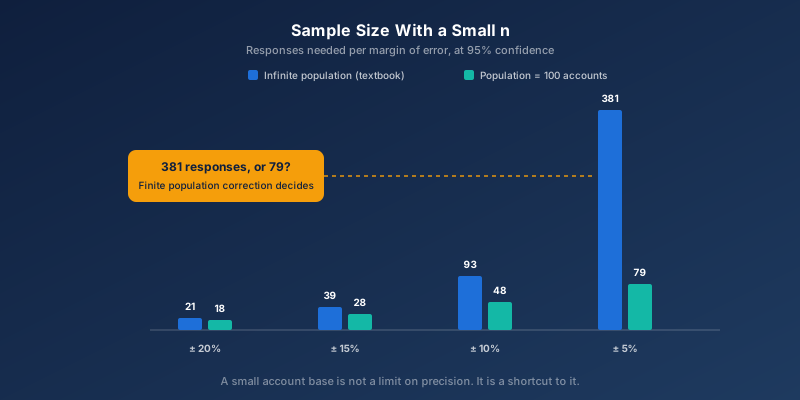
B2B Survey Sampling With a Small n: How Many Responses Do You Actually Need?
Classic sample-size formulas assume you are drawing from millions of people. When your entire customer base is 40 or 100 named accounts, the math works differently, and often in your favor.
![CX Governance: Who Owns Customer Experience in a B2B Organization? [2026]](/img/knowledge/cx-governance.svg)
CX Governance: Who Owns Customer Experience in a B2B Organization? [2026]
Most B2B companies never decide who owns customer experience, so it defaults to whoever has the loudest voice when a renewal is at risk. Here is what a governance model that actually holds looks like, including who owns what an AI agent says to your customers.
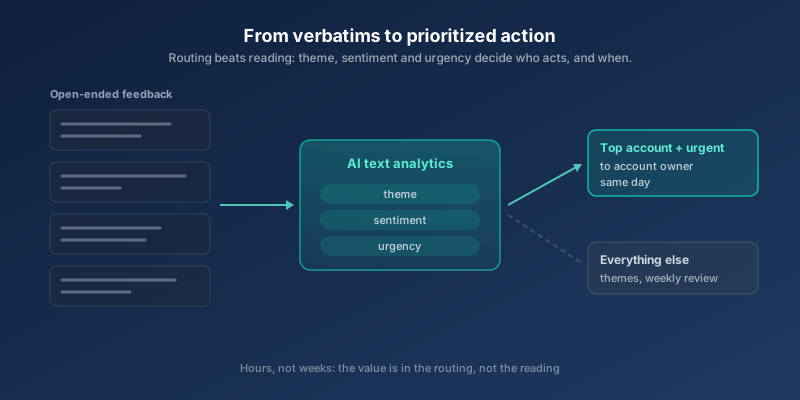
AI Text Analytics for Customer Feedback: From Verbatims to Prioritized Action
Most B2B teams buy AI text analytics to save analyst hours. The real return comes from something different: routing high-value, high-urgency feedback to the right owner in hours, not weeks.
![eNPS and Customer Experience: Why Employee Loyalty Sets the Ceiling on Your CX [2026]](/img/knowledge/enps-and-customer-experience.svg)
eNPS and Customer Experience: Why Employee Loyalty Sets the Ceiling on Your CX [2026]
In B2B, a handful of named account managers and support engineers are the relationship. Their engagement sets a ceiling on the experience your customers can have. eNPS is the cheapest early warning for that ceiling, if you stop reading it as a company-wide vanity number.
![The CX Maturity Model: How Mature Is Your CX Organisation? [2026]](/img/knowledge/cx-maturity-model.svg)
The CX Maturity Model: How Mature Is Your CX Organisation? [2026]
Most B2B companies place themselves two levels higher on the CX maturity ladder than their customers would. Here is a five-level model with a self-diagnosis, so you know where you actually stand and what the next level requires.
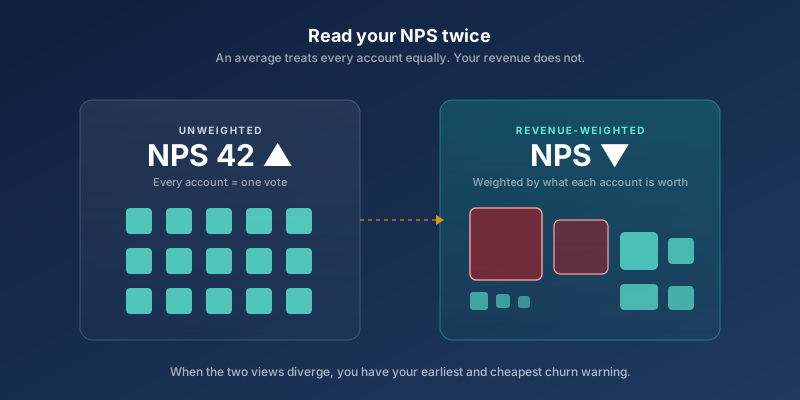
Account-Based CX: Run Your Feedback Programme on the Accounts That Pay the Bills
In most B2B companies a small share of accounts carries most of the revenue, yet every account gets the same survey and the same weight in the score. Account-based CX fixes that mismatch: weight feedback by account value, survey the whole buying group, and tier your follow-up.
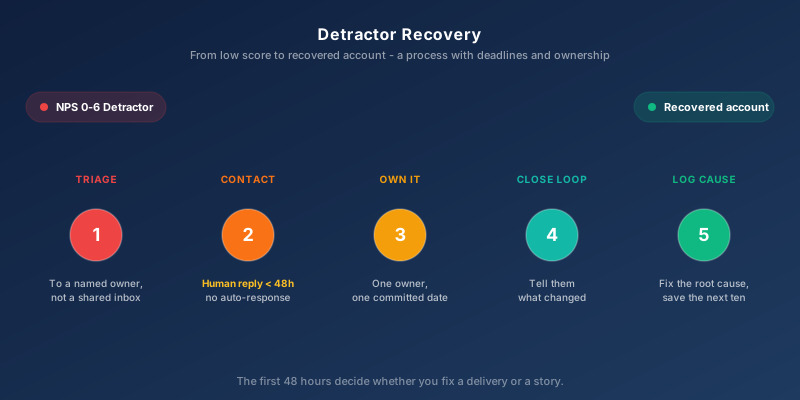
Detractor Recovery: The Playbook for Saving Unhappy B2B Accounts
A detractor is not a lost account. It is the most recoverable revenue you have, but only if you treat recovery as a process with deadlines and owners, not a goodwill gesture. Here is the playbook.
![GDPR and Customer Feedback in B2B: What You Can Actually Collect [2026]](/img/knowledge/gdpr-customer-feedback.svg)
GDPR and Customer Feedback in B2B: What You Can Actually Collect [2026]
You do not need consent to run a satisfaction survey. You need the right legal basis, disciplined data minimisation, and feedback data you can actually export. A 2024 CJEU ruling now shapes how you document that basis, and the EU Data Act's switching-fee ban has an exact date.
![The B2B Onboarding Survey: Design One That Predicts Churn [2026]](/img/knowledge/b2b-onboarding-survey.svg)
The B2B Onboarding Survey: Design One That Predicts Churn [2026]
Most onboarding surveys measure whether the customer finished your setup steps. That is the wrong question. Here is how to design a B2B onboarding survey that measures effort and value, and surfaces churn risk while you can still do something about it.
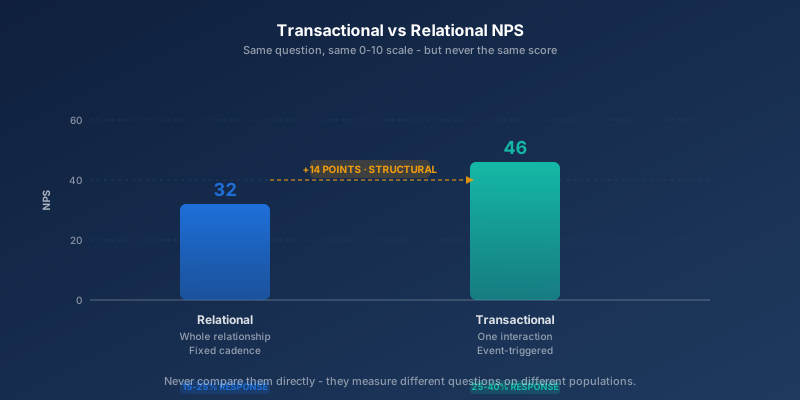
Transactional vs. Relational NPS: When to Use Each in B2B
Relational NPS tells you if the relationship is healthy. Transactional NPS tells you where a process broke. Most B2B companies measure one, too rarely, and then compare two numbers that were never comparable.
![How to Deliver Great Customer Service: Principles and Practice for B2B [2026]](/img/knowledge/customer-service.svg)
How to Deliver Great Customer Service: Principles and Practice for B2B [2026]
How do you deliver great customer service in B2B? The core principles, from First Contact Resolution to low effort done right, plus where AI self-service helps or erodes trust in 2026.
![What Is a Good Customer Experience? The Key Drivers in B2B [2026]](/img/knowledge/good-cx.svg)
What Is a Good Customer Experience? The Key Drivers in B2B [2026]
What is a good customer experience in B2B? A concrete definition, the six drivers that determine it, why buying committees make "good" relative, and a model for building and measuring it systematically.
![How to Build Customer Loyalty: Strategies That Drive Loyal B2B Customers [2026]](/img/knowledge/customer-loyalty.svg)
How to Build Customer Loyalty: Strategies That Drive Loyal B2B Customers [2026]
How do you build customer loyalty in B2B? Why satisfied customers still leave, the real drivers, and the concrete moves that turn accounts into advocates.
![How to Measure Customer Satisfaction: Methods, Metrics and Best Practice [2026]](/img/knowledge/measure-satisfaction.svg)
How to Measure Customer Satisfaction: Methods, Metrics and Best Practice [2026]
How do you measure customer satisfaction in practice? The methods, the three metrics, who to survey in the buying group, and where passive signals fit alongside the survey.

Meet Anders Christiansen: Board Chair with 30 Years of Software Experience Across Denmark, the US and the UK
Anders Christiansen is the board chair of SurveyGauge. He has built software companies in three countries, served as CEO and exited businesses. Here he talks about his role, why real-time CX is a turning point and where SurveyGauge is heading.
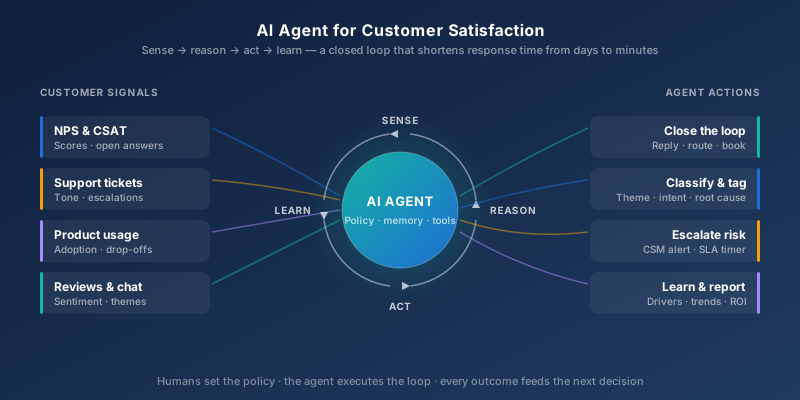
AI Agents for Customer Satisfaction: From Feedback to Action in Minutes
An AI agent is not a chatbot. It reads feedback, prioritises, acts and learns. Here is how to use one to cut your response time on unhappy customers from days to minutes.
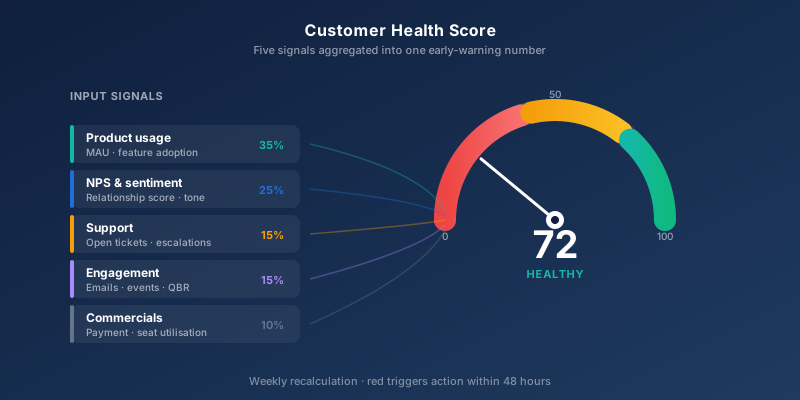
Customer Health Score: Build an Early Warning System for Churn
Customers decide to churn 60-90 days before the cancellation hits your CRM. A Customer Health Score surfaces the signal before you lose them. Here is how to build one that actually works.
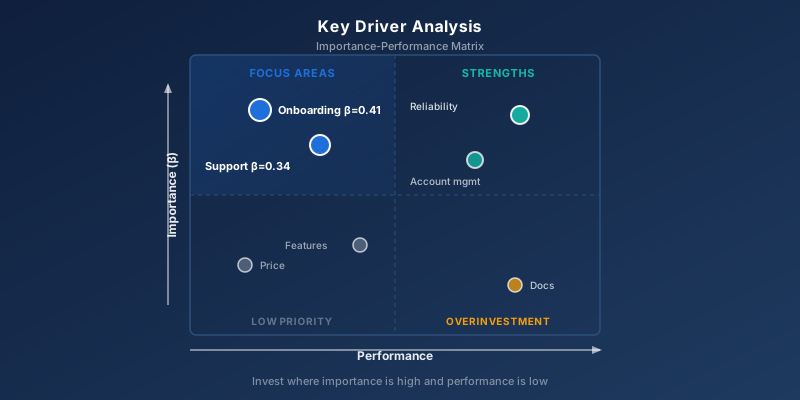
Key Driver Analysis: Find Out What Actually Moves Your NPS
NPS tells you THAT something is wrong. Key driver analysis tells you WHAT. Here is the method that turns a score into a prioritised action plan.
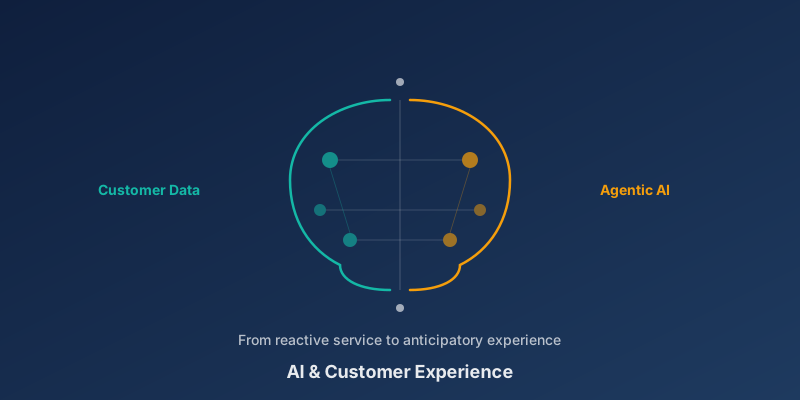
AI and Customer Experience in 2026: From Agentic AI to Anticipatory CX
KPMG's global CX benchmark shows 55% of CEOs rank AI as their top investment priority. A newer KPMG pulse survey shows the real divide isn't model quality, it's whether the CEO is actually accountable for AI-driven decisions.
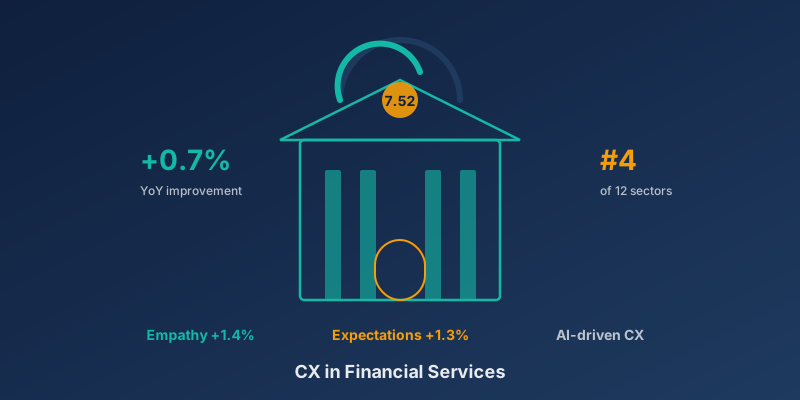
CX in Financial Services: Banking, Empathy, and Personalization
Banking ranks 4th globally in KPMG's benchmark, but that ranking is built on retail interactions. CustomerGauge's 2026 NPS data tells a different story for B2B: banking specifically sits at 30, well below the sector average of 44, and relationship-driven sub-sectors consistently outperform it.
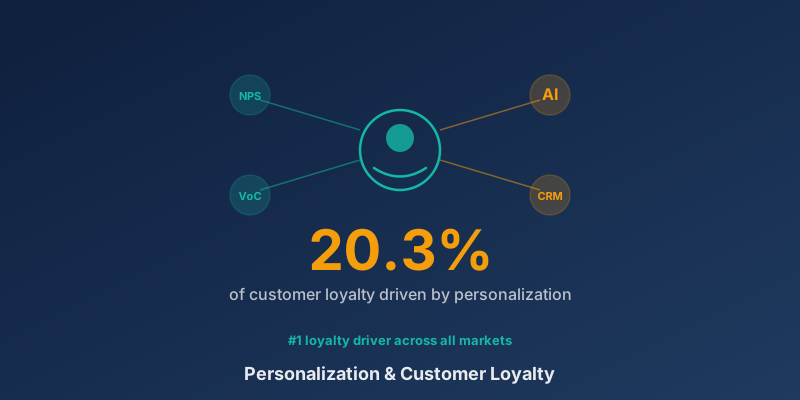
Personalization Drives 20% of Customer Loyalty: What It Means for Your CX Strategy
Personalization drives the single largest share of customer loyalty in KPMG's global CX benchmark. But Gartner's 2025 data shows it backfires for over half of customers when it feels like surveillance rather than help. Here is how to get it right in B2B.
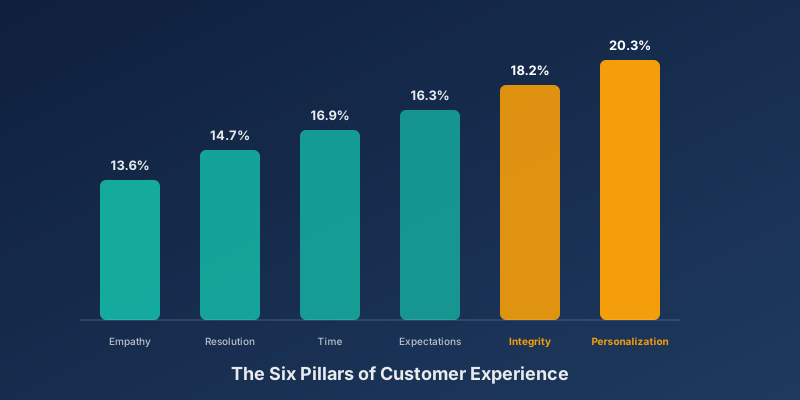
The 6 Pillars of Customer Experience: What Drives Loyalty and NPS
KPMG's Customer Experience Excellence report identifies six universal drivers behind NPS and loyalty, weighted from 80,594 interviews. Integrity and Personalization combined drive 39% of loyalty, and B2B buying committees make Personalization structurally harder than in B2C.
![Close the Loop: The Complete Guide to NPS Follow-Up [2026]](/img/knowledge/close-the-loop.svg)
Close the Loop: The Complete Guide to NPS Follow-Up [2026]
Most B2B companies that measure NPS never act on it. This guide breaks down the 48-hour rule for Detractors, segment-specific workflows for Detractors, Passives and Promoters, the CRM integration that makes it stick, and the four numbers that prove it is working.
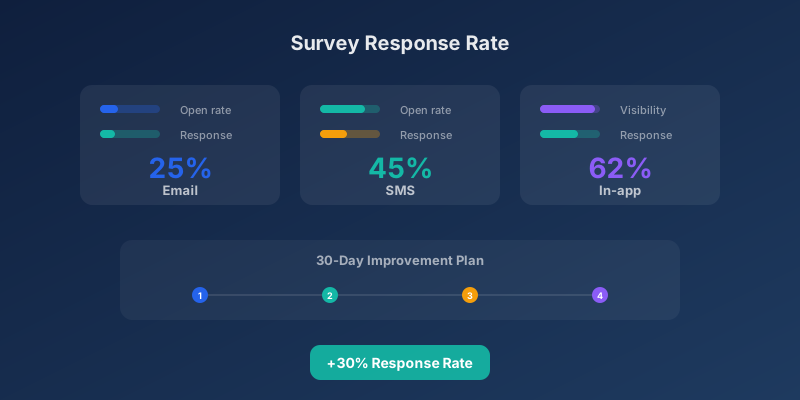
How to Improve Your Survey Response Rate: A Data-Driven Guide for B2B Teams
An NPS based on 12 responses out of 2,000 customers is not a measurement. It is noise. The industry's real average is 12.4%, not the 20-30% everyone quotes. Here is what actually gets a B2B programme into the forties, where the data starts to be trustworthy.
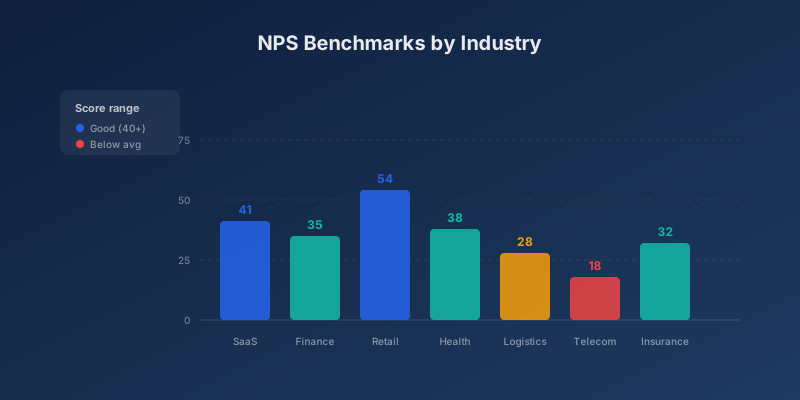
NPS Benchmarks 2026: What Is a Good NPS Score by Industry?
An NPS of 30 is excellent in telecoms but mediocre in SaaS. See good NPS scores by industry, region and business model for 2026, updated with CustomerGauge's Decade Edition data, and how to read them.
![What Is Customer Satisfaction? The Complete B2B Guide [2026]](/img/knowledge/customer-satisfaction.svg)
What Is Customer Satisfaction? The Complete B2B Guide [2026]
Every company says they care about customer satisfaction. Yet few can define it, measure it properly, or connect it to revenue. Here is how to do all three.
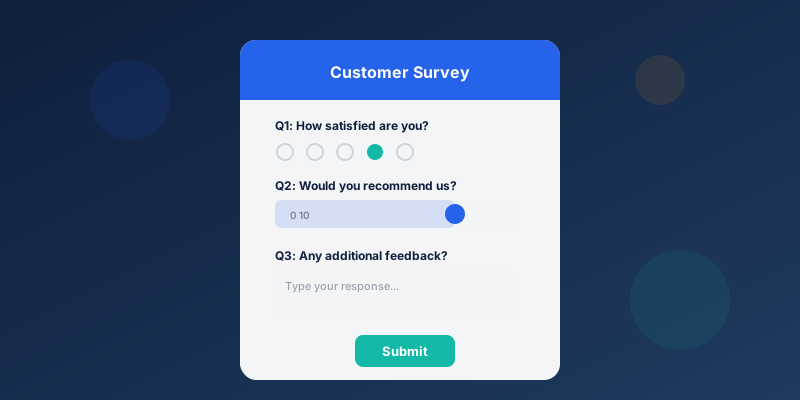
10 Rules for Surveys That Deliver Real Insights
A poorly designed survey is worse than no survey. It gives you confidence in data that is wrong. Here are ten rules that fix the most common mistakes we see in B2B survey programmes.
![Customer Satisfaction and Revenue: How to Build the Business Case [2026]](/img/knowledge/revenue.svg)
Customer Satisfaction and Revenue: How to Build the Business Case [2026]
Your CFO does not care about NPS. They care about revenue. Here is how to translate customer satisfaction into retention, expansion and profit, and why fixing your Detractors is worth more than creating new Promoters.
![Voice of Customer (VoC): The Complete B2B Guide [2026]](/img/knowledge/voc.svg)
Voice of Customer (VoC): The Complete B2B Guide [2026]
Most VoC programmes do not die from bad technology. They die from the action nobody owns. Here is how to build one that connects feedback to account value and revenue, not just a dashboard.
Close the Loop: What Is It, and How Do You Do It?
You sent the survey. Now what? Specifically, close the loop is the practical execution of following up on every response, recovering Detractors, and turning patterns into systemic fixes.

How to Reduce Churn: 7 Strategies That Work
Churn is the most expensive problem most B2B companies underestimate. Seven strategies that work, from NPS early warning systems to win-back campaigns, with the CustomerGauge and Bain research behind each one.
![What Is Customer Journey Mapping? The Complete Guide [2026]](/img/knowledge/customer-journey.svg)
What Is Customer Journey Mapping? The Complete Guide [2026]
Customer journey mapping turns scattered customer data into one clear view of the end-to-end experience. Here is a persona-first guide to building one in 2026, and why most maps never change anything.
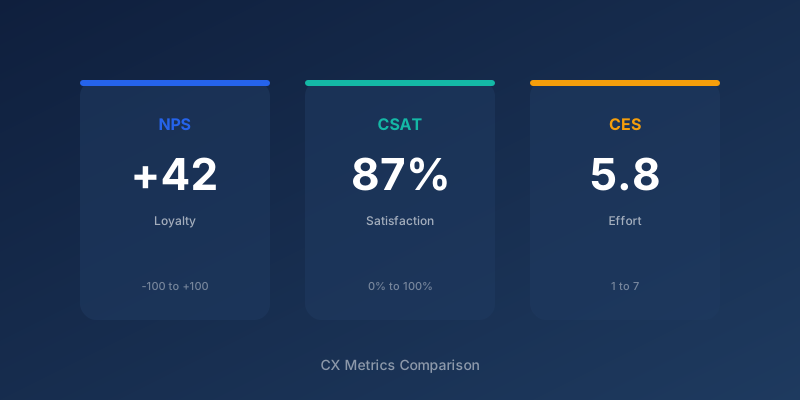
NPS vs. CSAT vs. CES: Which Metric Should You Choose?
NPS, CSAT, and CES measure different things, and the real question in 2026 is not which one wins. It is when to layer a second metric on top of NPS, and when adding one just adds noise.
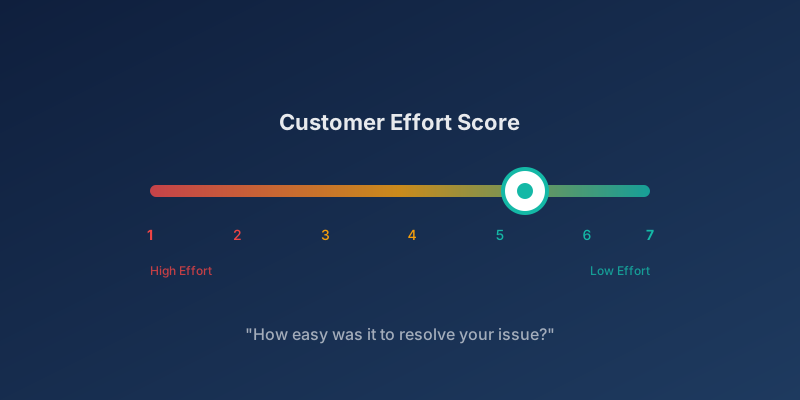
What Is CES? Customer Effort Score Explained
Customer Effort Score (CES) measures how hard it was for a customer to get something done. It predicts churn better than satisfaction does.
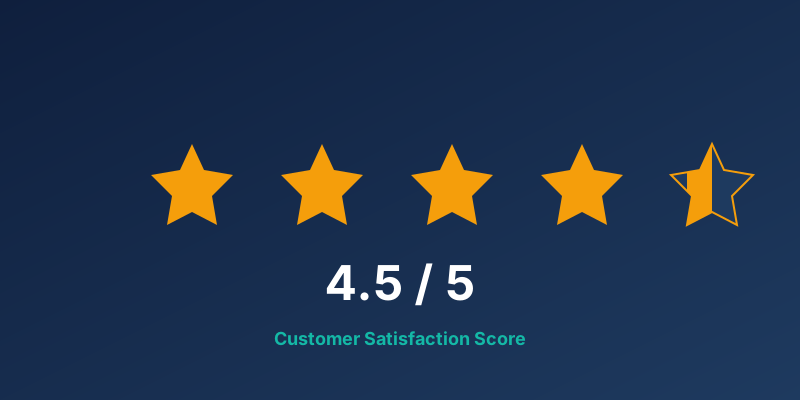
What Is CSAT? Guide to Customer Satisfaction Score
CSAT is the most direct satisfaction metric you can use, but it is also the most abused. Therefore, here is how to deploy it properly, when to trust it, and when it misleads.
![What Is NPS? The Complete Guide to Net Promoter Score [2026]](/img/knowledge/nps.svg)
What Is NPS? The Complete Guide to Net Promoter Score [2026]
NPS is the most widely used loyalty metric in the world, and also the most frequently misused. Indeed, the score means nothing without follow-up. Here is how to use it properly.